Today we had another day of firsts, despite being 18 months into our motorhome life: our first trip by Eurotunnel, our first trip outside of the UK, our first night in an aire…
After making our way to Black Horse Farm CMC site yesterday, we had a short drive to reach the Shuttle this morning. Thankfully, our trip through passport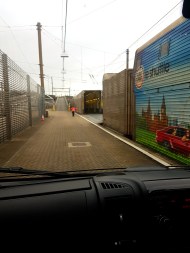 control and security was slick as we both forgot to set alarms and left Folkestone shortly after boarding the train. The journey across the Channel was approximately 35 minutes and we disembarked smoothly into bright sunshine – even remembering to drive on the right side of the road.
We headed South towards Arras and associated World War I memorials along good quality roads with little traffic. We passed through one section of tolls (85km) and paid 11,20€ for the privilege.
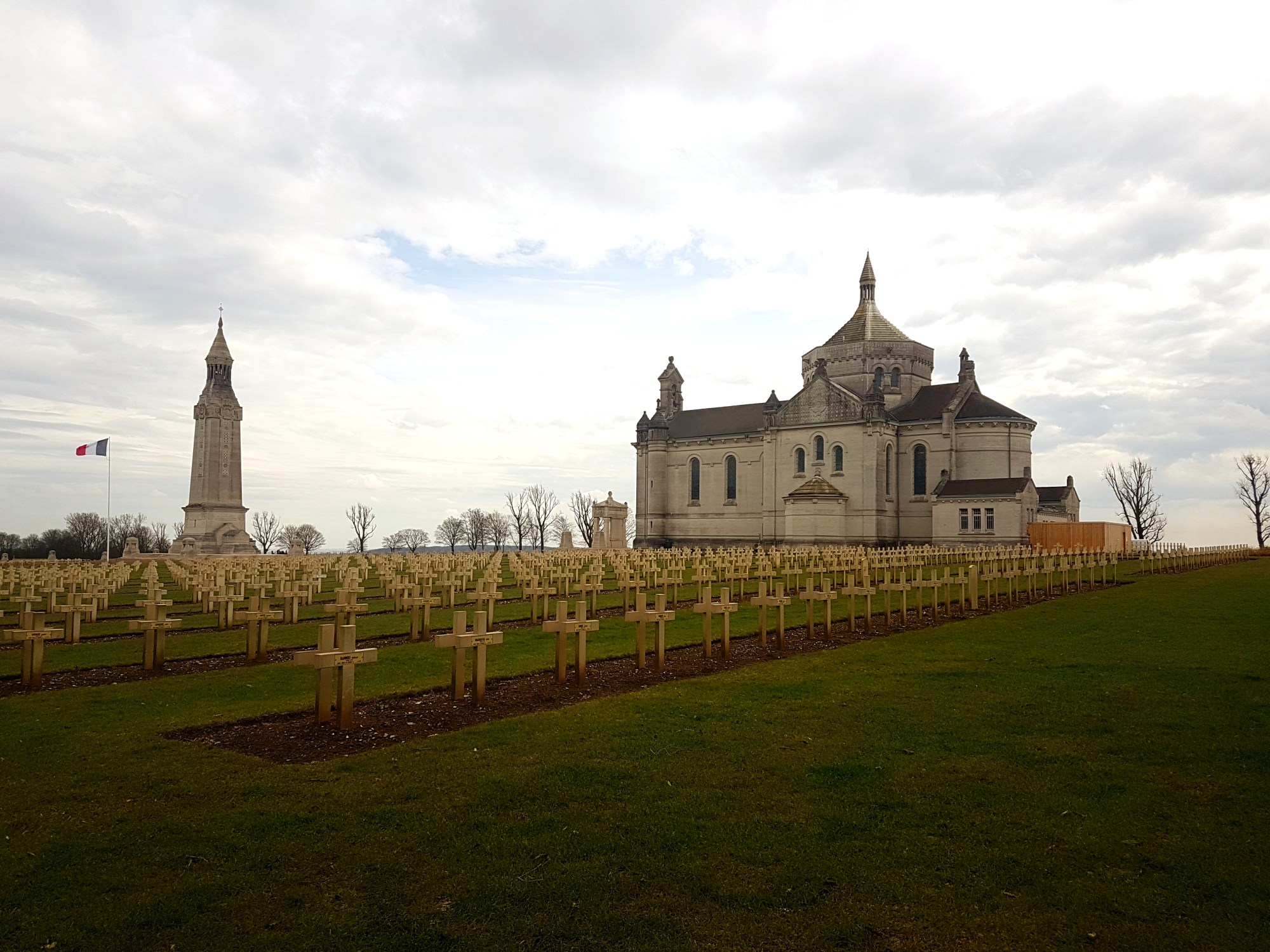
Approximately one hour later, and after a minor detour through the village of Souchez, we meandered along the rather grand approach to Notre Dame de Lorette National Cemetery. This is the largest French war cemetery where 40,000 soldiers have been laid to rest; 22,000 of these are unidentified and buried together in mass graves. The white stone basilica stands in the centre of the cemetery with the lantern tower opposite. Across the road, and next to a viewing platform from which you can look across the “front” towards Vimy Ridge, stands the Ring of Remembrance where the names of all 580,000 soldiers who died are listed irrespective of rank of nationality. It was incredibly moving and eye-opening to see the sheer quantity of men who lost their lives at this location.


There is plenty of parking around the cemetery for vehicles of every size and shape. Despite several school trips being present, it did not feel overcrowded. There is also a restaurant, museum and clean portable toilets for your convenience. Visitors to the cemetery are greeted by a volunteer Guard of Honour, identified by their berets and tricolore arm bands.
Just a short drive away, we visited the Cabaret-Rouge British Cemetery, who’s name stems from a local café which once stood nearby. The repatriation of soldiers from across the Commonwealth was not possible following the war, so it was decided that the fallen would be buried as close to their place of death as possible. The Cabaret-Rouge British Cemetery – an amalgamation of over 100 other local cemeteries – has more than 7,650 graves and was designed by Frank Higginson, a former Canadian army officer. These graves remember the fallen servicemen from across the British Empire. What was particularly striking was how many graves were for the “unknown soldier” – each with their own headstone depicting regiment (where known) and religion. One unknown Canadian soldier was repatriated in May 2000 as an act of remembrance for the 116,000 Canadian soldiers who gave their lives during the Great War. His headstone has been replaced with one to remember his sacrifice alongside his repatriation. If you were to visit Cabaret-Rouge to locate a family member or grave, there are alphabetical registers set into the walls of the white stone domed entrance building with exact locations written next to each serviceman’s name.


Restricted by time, we headed south to Arras itself and our first Aire (Rue des Rosati – N50°17.688’ E002°47.121). Just a ten-minute walk from the historic town centre, there are 10 motorhome bays with WC disposal point, grey waste disposal, fresh water and optional electricity (for a charge of 2€ per hour). A local supermarket – Carrefour – is just a couple of minutes away so it is very well appointed.


 This is not a midlife crisis...