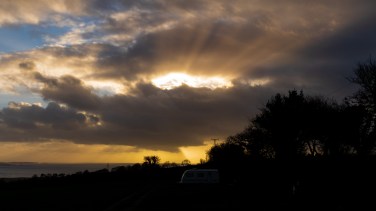
 We were suitably impressed by the peace and serenity that Caemawr Camping and Caravan Site provided. The views and the sunset were superb AND we had the site to ourselves. It was almost a shame to leave after such a short stay, although it will be on our list of places to return to. We didn’t realise how much there was to do locally.
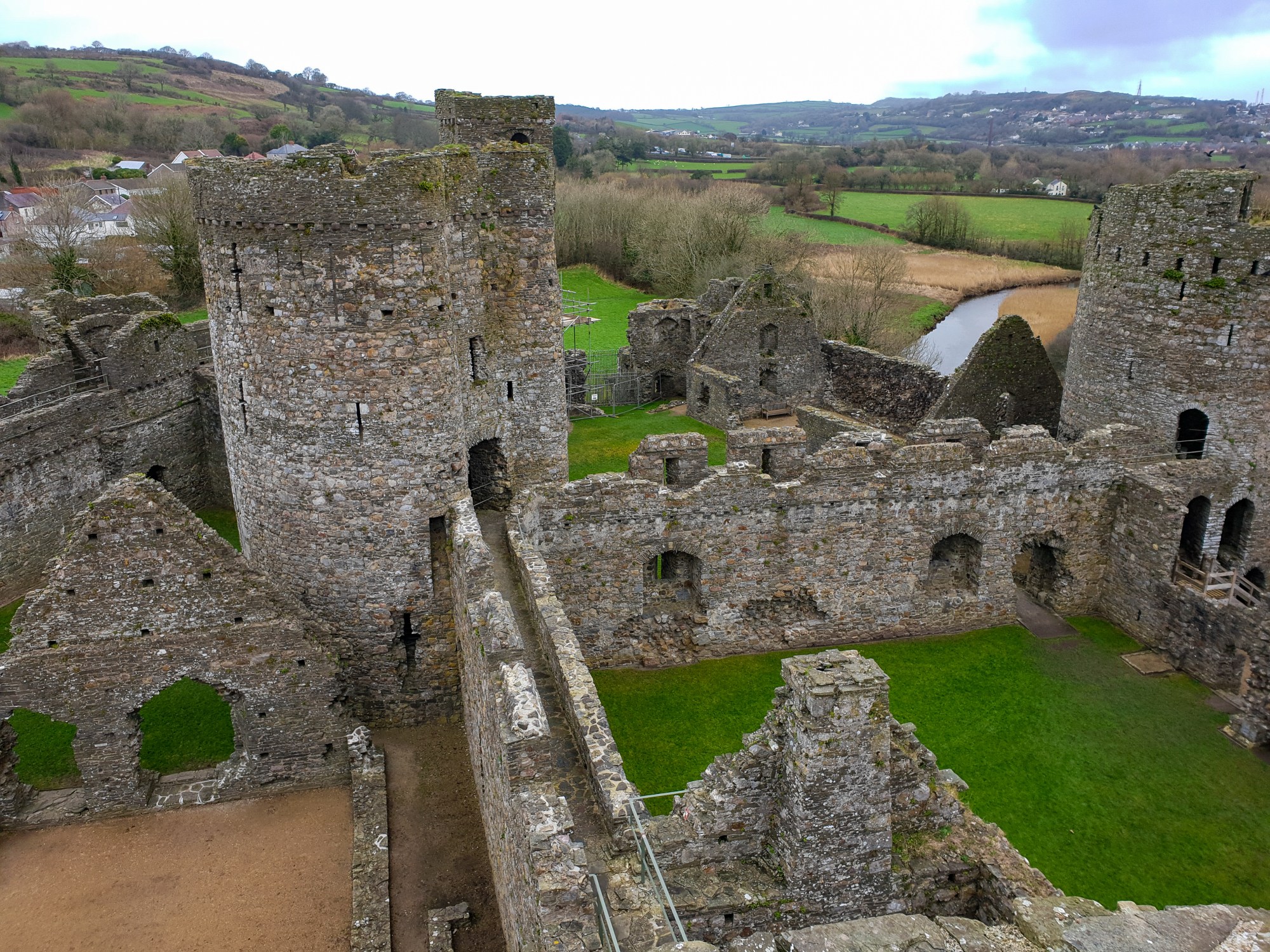
Full of water (the van not us!) and after a good night’s sleep, we meandered our way towards Kidwelly Castle. Recommended by a friend, the castle certainly didn’t disappoint and provided us with many a jaw-dropping moment: We do love a castle!
The earliest castle on this site was Norman with the surrounding town being founded in 1115AD. By the 13th century, the previously wood and earth structure had been rebuilt in stone following the half moon shape favoured by the Normans. This concentric design, with one circuit of defensive walls inside another, would help the castle to stand even if the outer wall were to fall. The present castle remains show work from approx. 1114AD to 1476 and, remarkably, was initially built as a defence against the Welsh!


We loved the castle: while it had information boards in key places and plaques to warn about slippery stones and uneven steps, it was generally “untouched” throughout. There were many nooks and crannies to explore both above and below ground. While work was being carried out in various places – it does take a lot to maintain a castle – it was easy to move from room to room and floor to floor. We particularly enjoyed the spectacular view from the top of one tower; it was totally unexpected that we would be able to get so high in a ruin. As it is not currently the school holidays in Wales, it was relatively deserted. However, there is ample parking for small and larger vehicles within the town. They have definitely geared themselves up for the thousands of visitors the castle draws in each year.
From the castle, we made our way to Haverfordwest and the Welsh Spitfire Museum. This was an attraction due to our love of WW2 history but also Spitfires – they’re amazing! We loved the idea behind the charity shop – to raise enough money (£1.5 million) to restore the plane to flying status.


On arrival, we asked permission to go through to the museum from two gentlemen who were running the store. They showed us through a union flagged curtain to a corridor of relics and memorabilia including newspapers, propeller blades, flying equipment and a Merlin engine. Turning the corner, we saw the Spitfire in it’s deconstructed glory. The cockpit and fuselage were contained on one side while the tail, engine house and wings were against the back wall. Clearly, a lot of work had been put into restoring the plane so far, and returning it to the UK but there was still a long way to go. It was fascinating to see it it’s current state, along with all the other memories that had been collated.

 This is not a midlife crisis...