Unexpected blue sky always sets you up for a good day.
After leaving Rookesbury Park, we drove back to Portsmouth to visit The D-Day Story. Parking easily in Avenue de Caen, we used the RingGo app to pay for parking (it is pay and display 24 hours a day/7 days a week) before heading off to look at the “lighthouse” on the Seafront. What a surprise that was!
Southsea Castle and Lighthouse
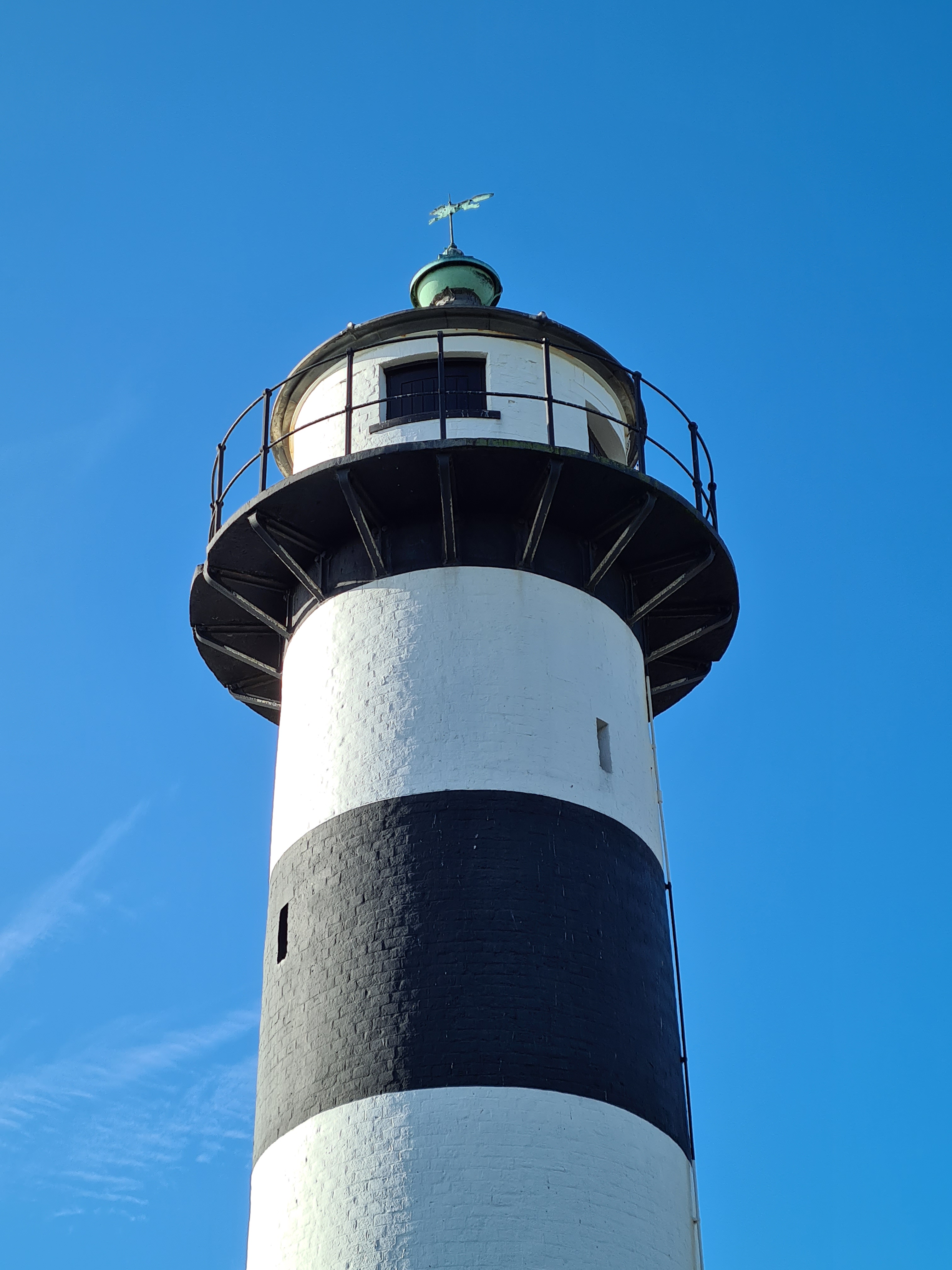
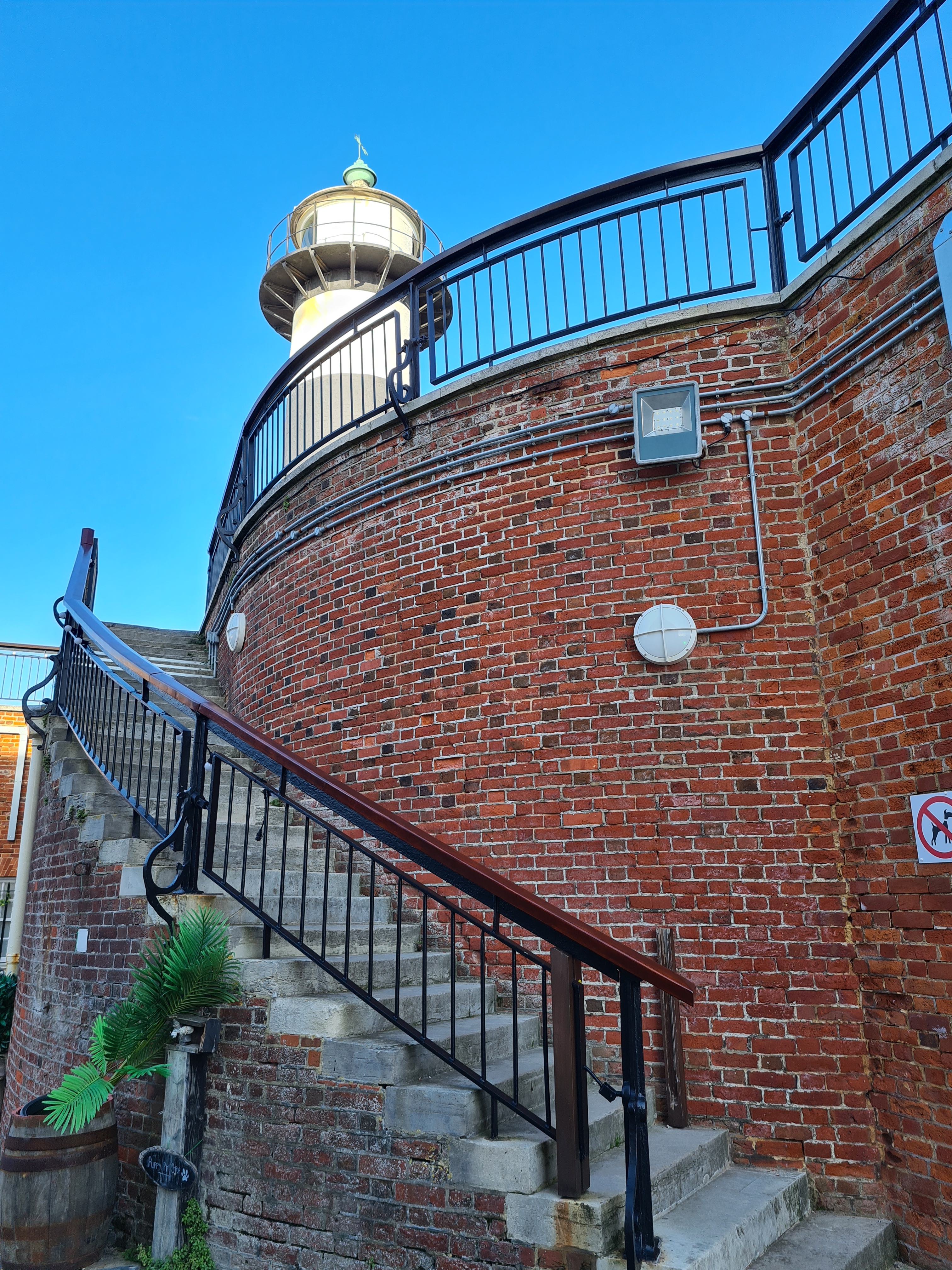
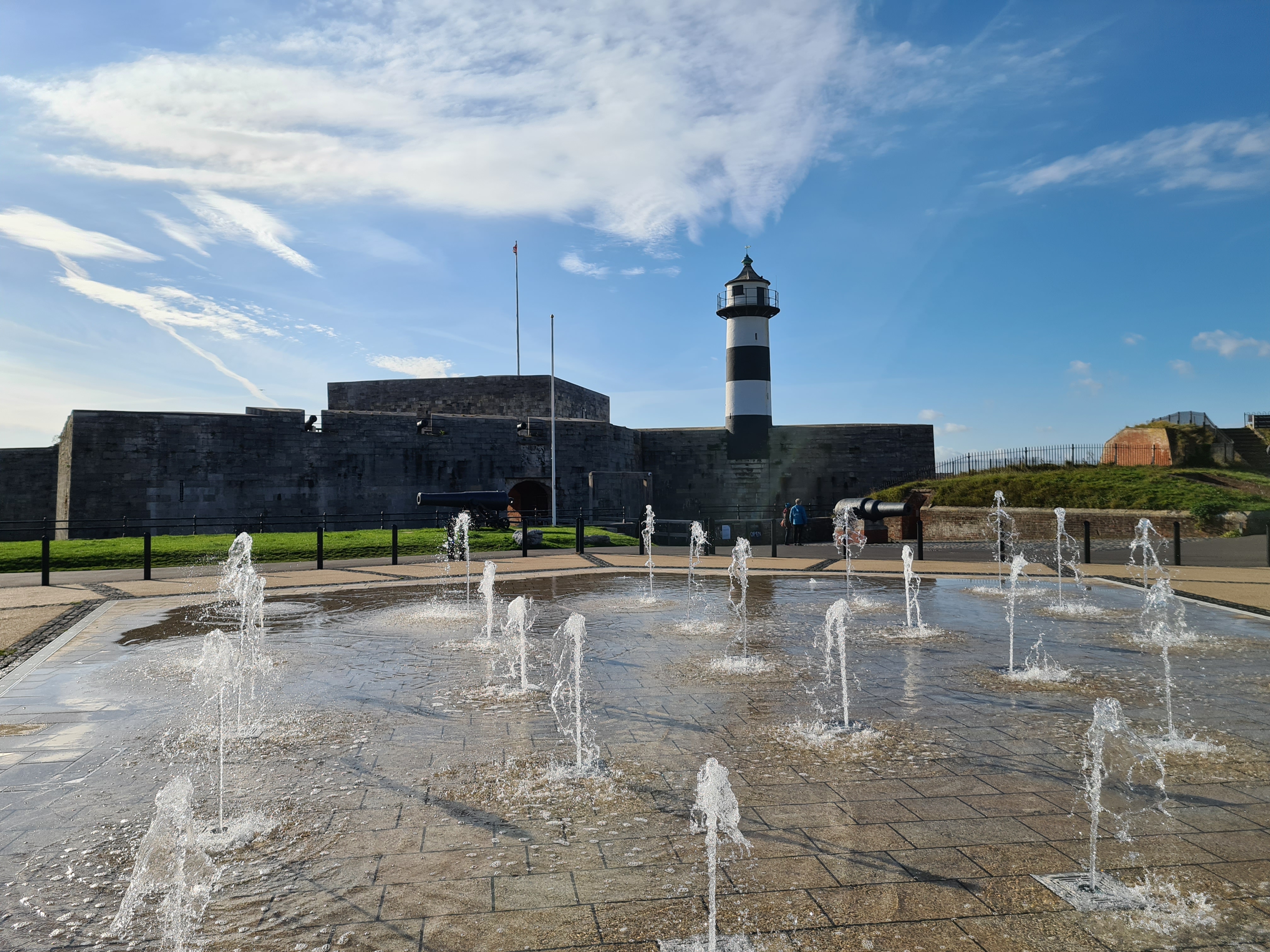
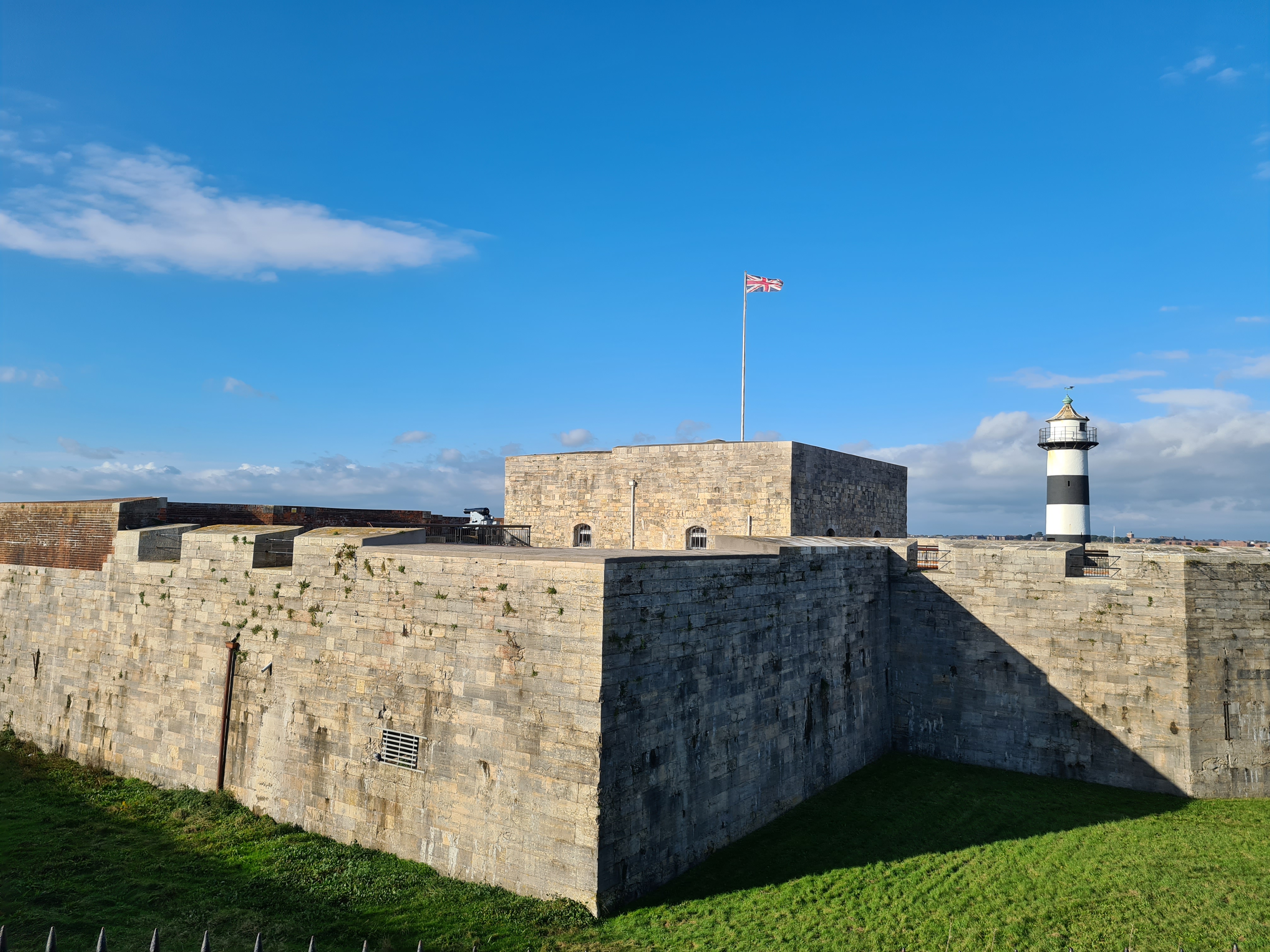
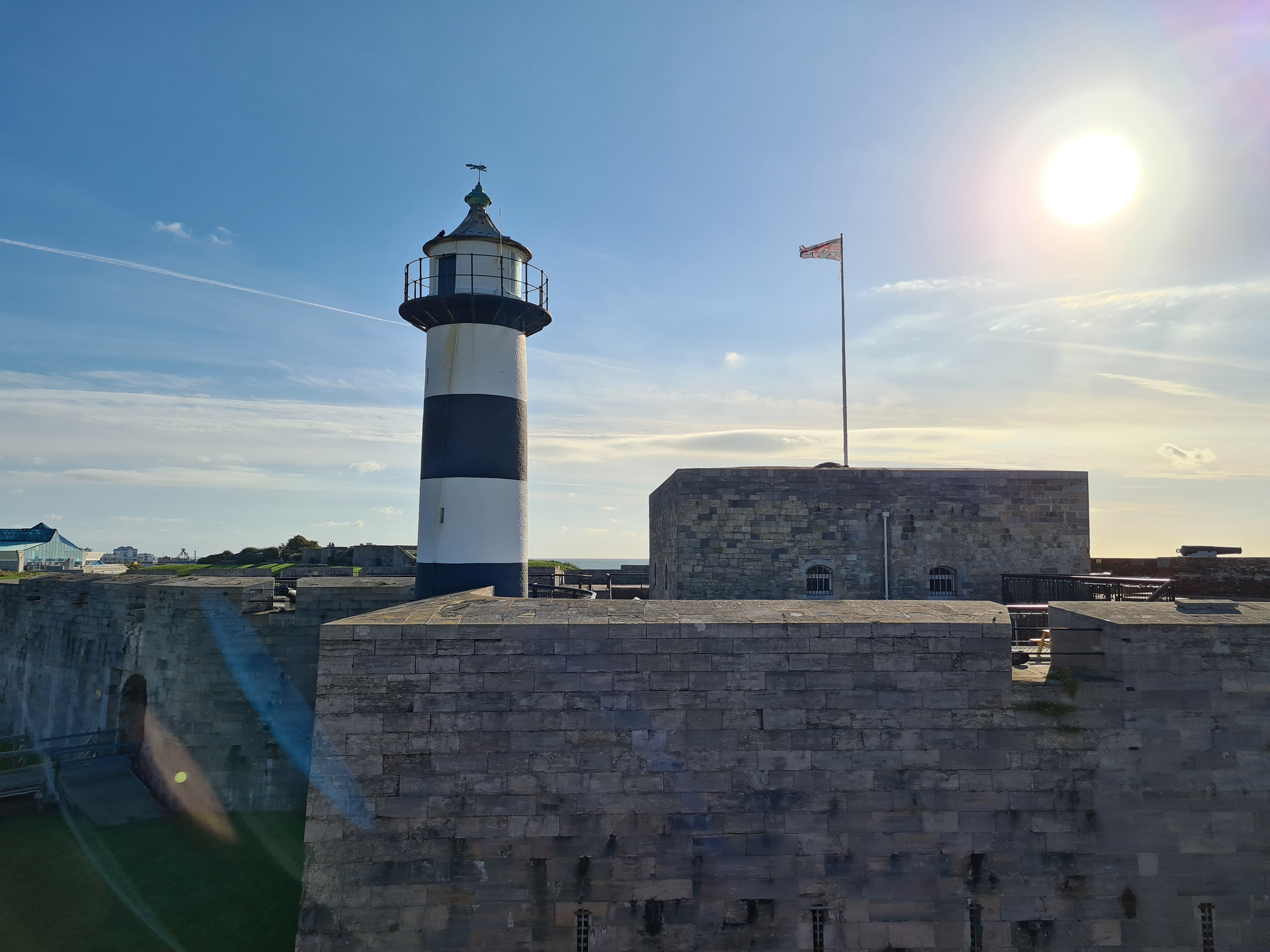
We crossed onto Brian Kidd Way and walked through a beautifully kept and peaceful avenue of flowers before reaching fountains. What we thought was just a lighthouse was actually part of Southsea Castle, built on the orders of King Henry VIII in 1544. Throughout over 400 years of active service, the castle saw many changes. However, it’s purpose has always been the same: to guard the approaches to Portsmouth Harbour, to protect the city and the dockyard.
In 1960, the castle was finally withdrawn from active service when it was bought from the Crown but Portsmouth City Council. There were conditions of purchase: that the lighthouse continued to be a working lighthouse and that The Royal Navy could fly a flag there should they need to. The lighthouse is now automatic but is noticeable against the skyline across Portsmouth and from the sea. The castle is now a popular tourist attraction with a small but informative museum, a shop, restaurant, and brewery. There are some remaining cannons, but the ramparts are mainly used as a viewing platform. There had even been a wedding in the grounds, last night.
We thoroughly enjoyed this unexpected visit. The volunteers were incredibly friendly and informative and, with just a request for donations, this historical gem is accessible to everyone.
The D-Day Story
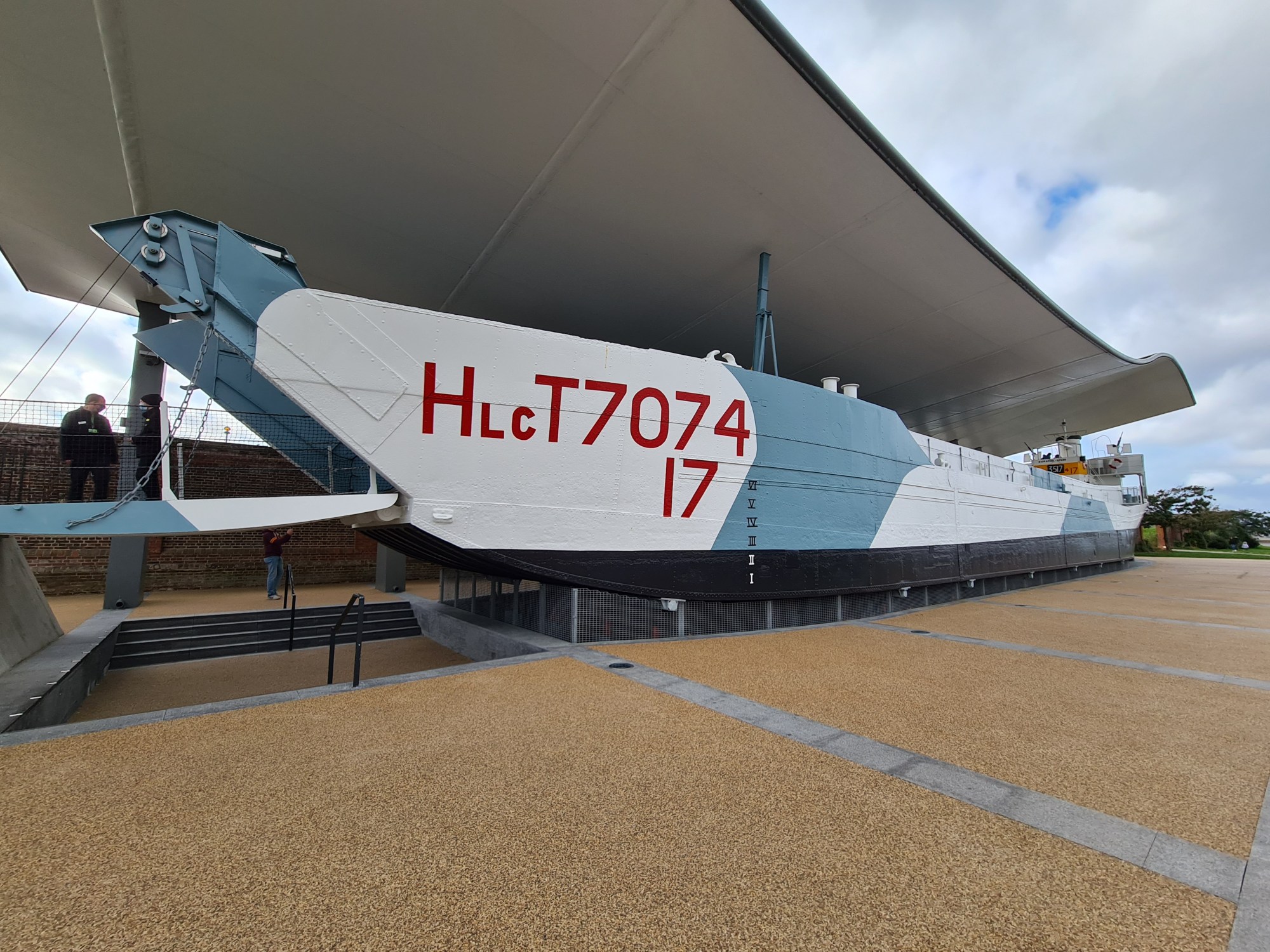
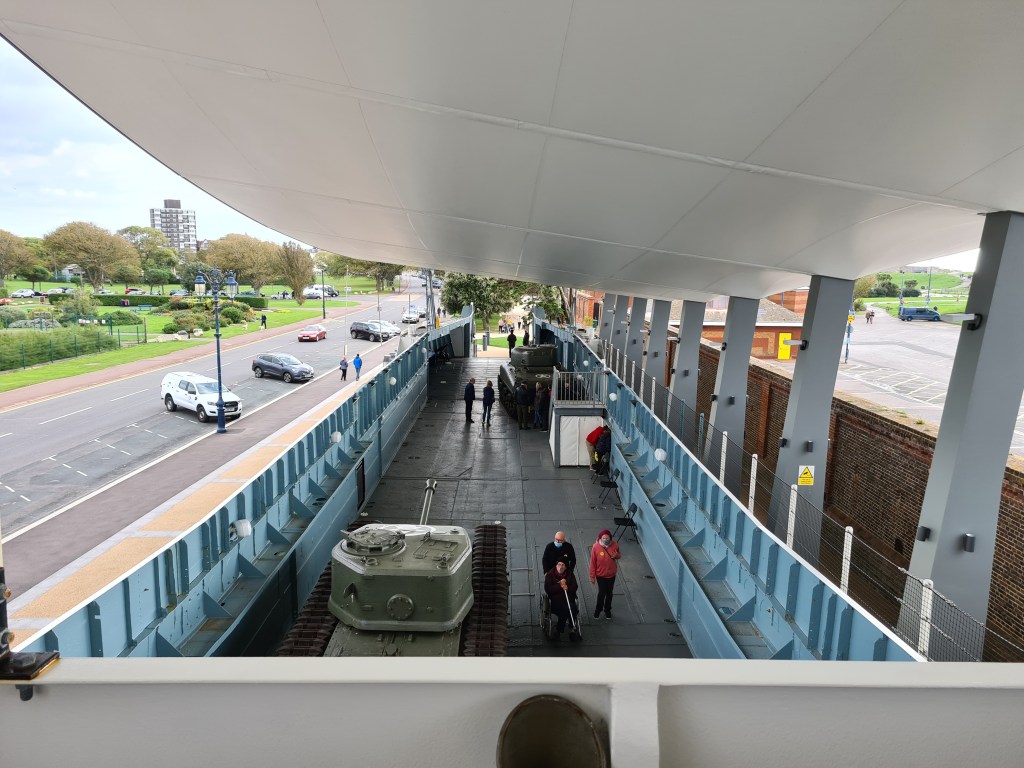
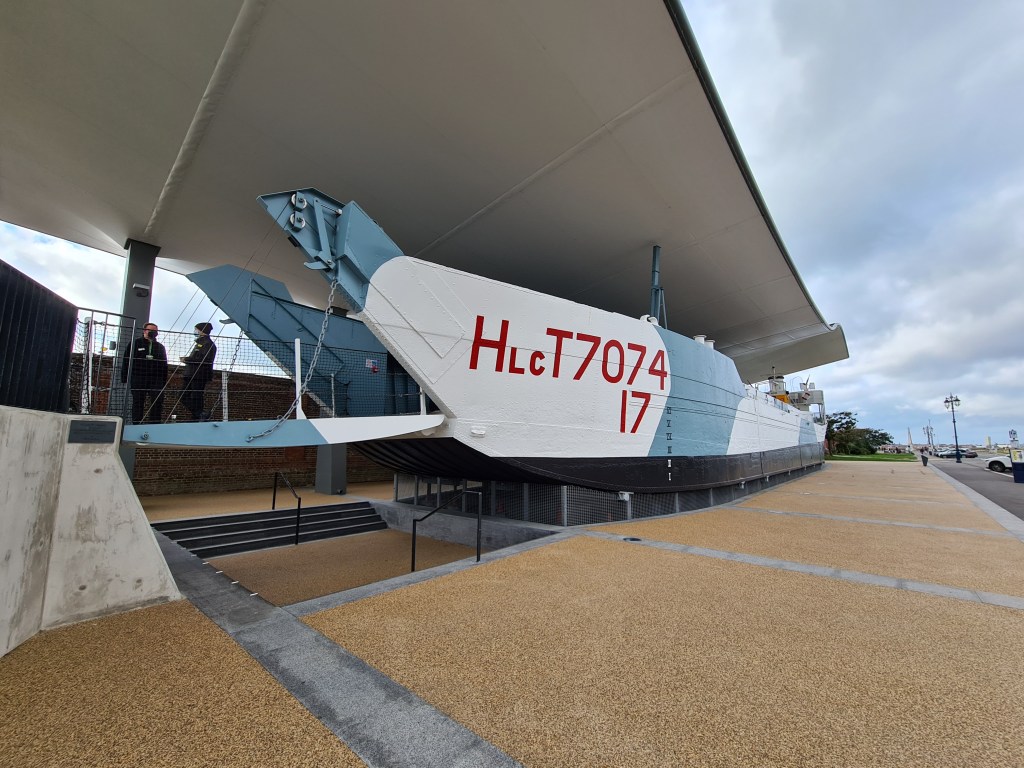
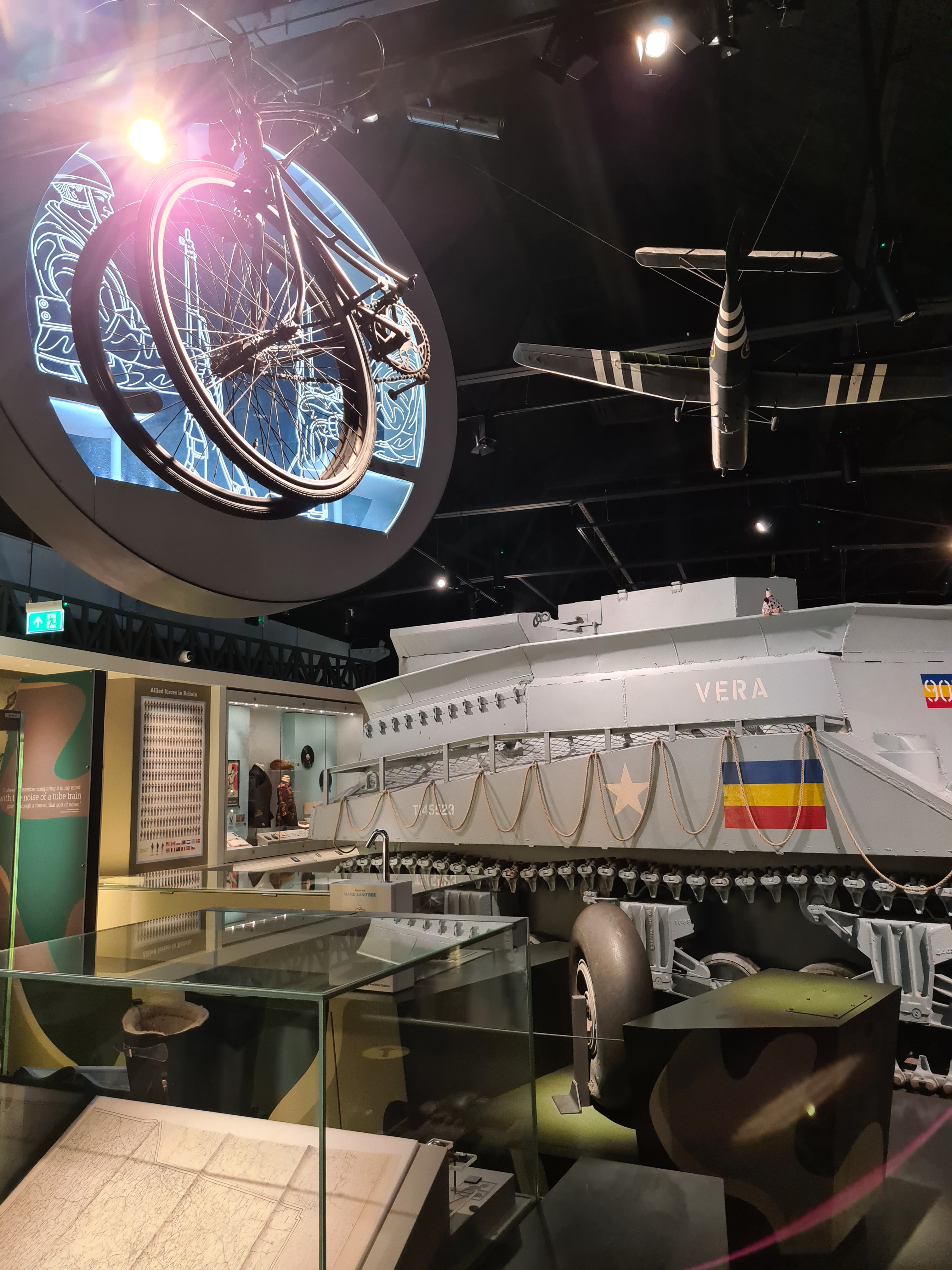
Making our way to The D-Day Story, we were keen to see the Landing Craft Tank (main picture) and other things relating to this monumental day in history. TripAdvisor had mixed reviews on this experience, but we could not have been more impressed. After purchasing our tickets, we headed outside to Landing Craft Tank LCT 7074. The history of this landing craft, both during WWII and after, amazed us. The condition of it, now, is exceptional and it has been restored to much of it’s former glory.
LCT 7074 is the last surviving landing craft tank from D-Day and it played a vital role in transporting men and supplies across the English Channel. After it was retired, LCT 7074 was turned into a nightclub but fell into disrepair and sank in Birkenhead docks. A multimillion pound restoration project followed, which has made it available today.
You enter the landing craft via the ramps at the bow (front), which was used to load and unload the vehicles it carried. Onboard, there were Churchill and Sherman tanks – much bigger than I imagined. However, on D-Day there would have been ten tanks, their crews and the crew of the landing craft on board. The crews of the landing crafts would have lived on board wherever their vessel was – hammocks or beds were visible for all permanent crew.
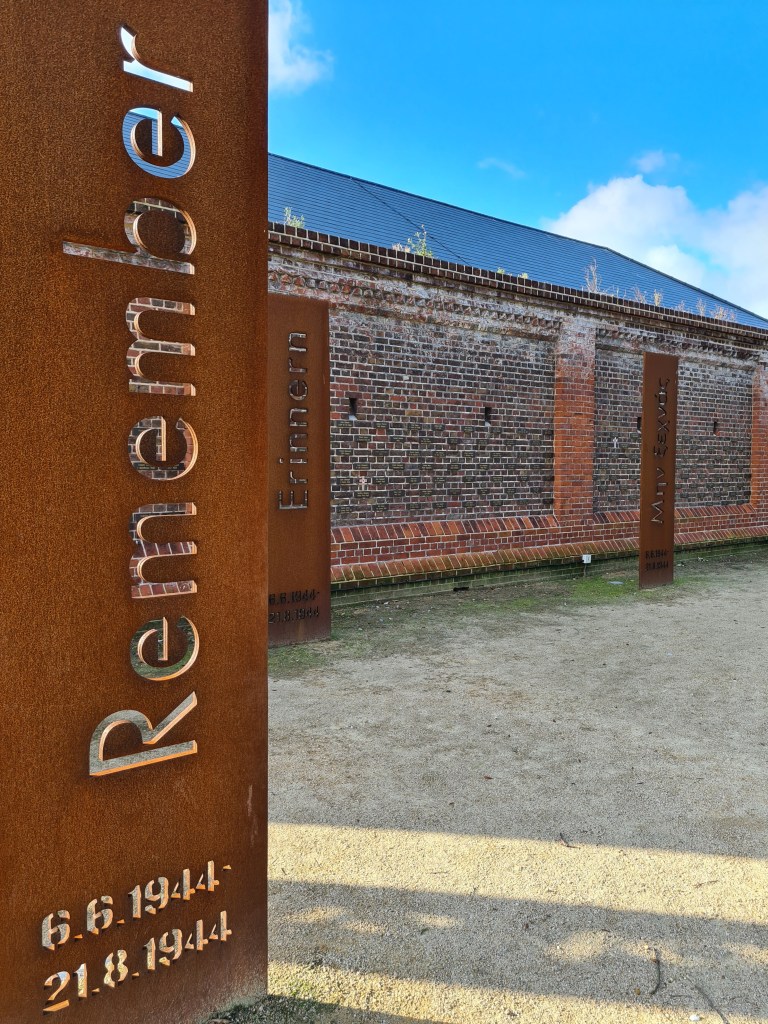
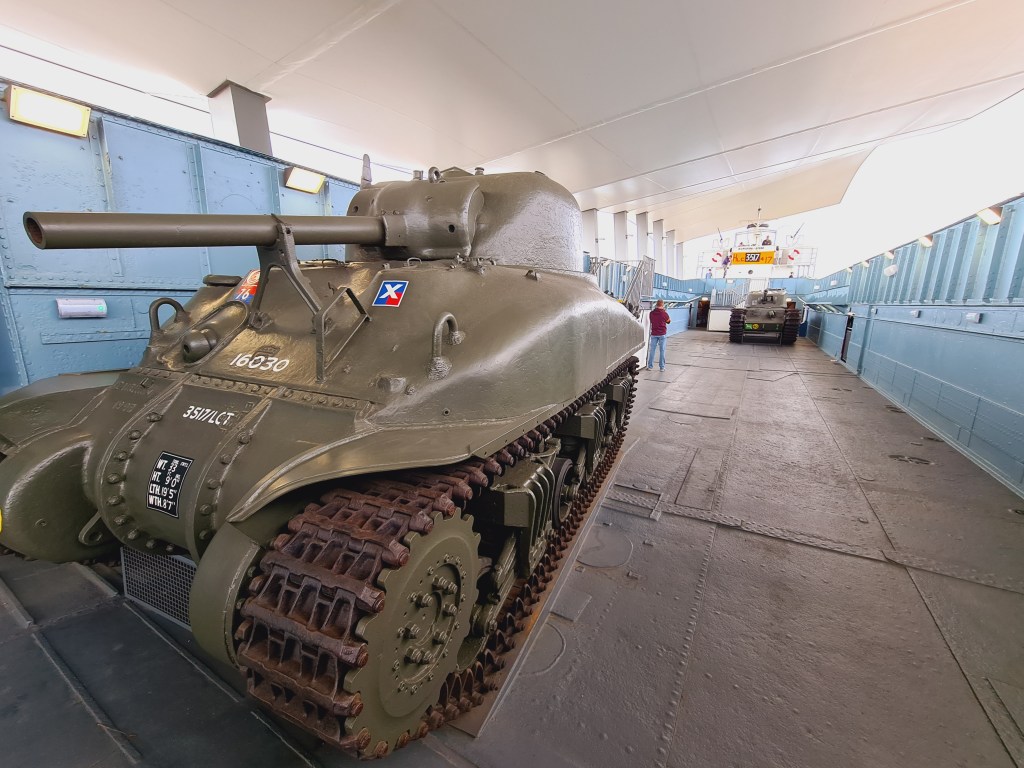

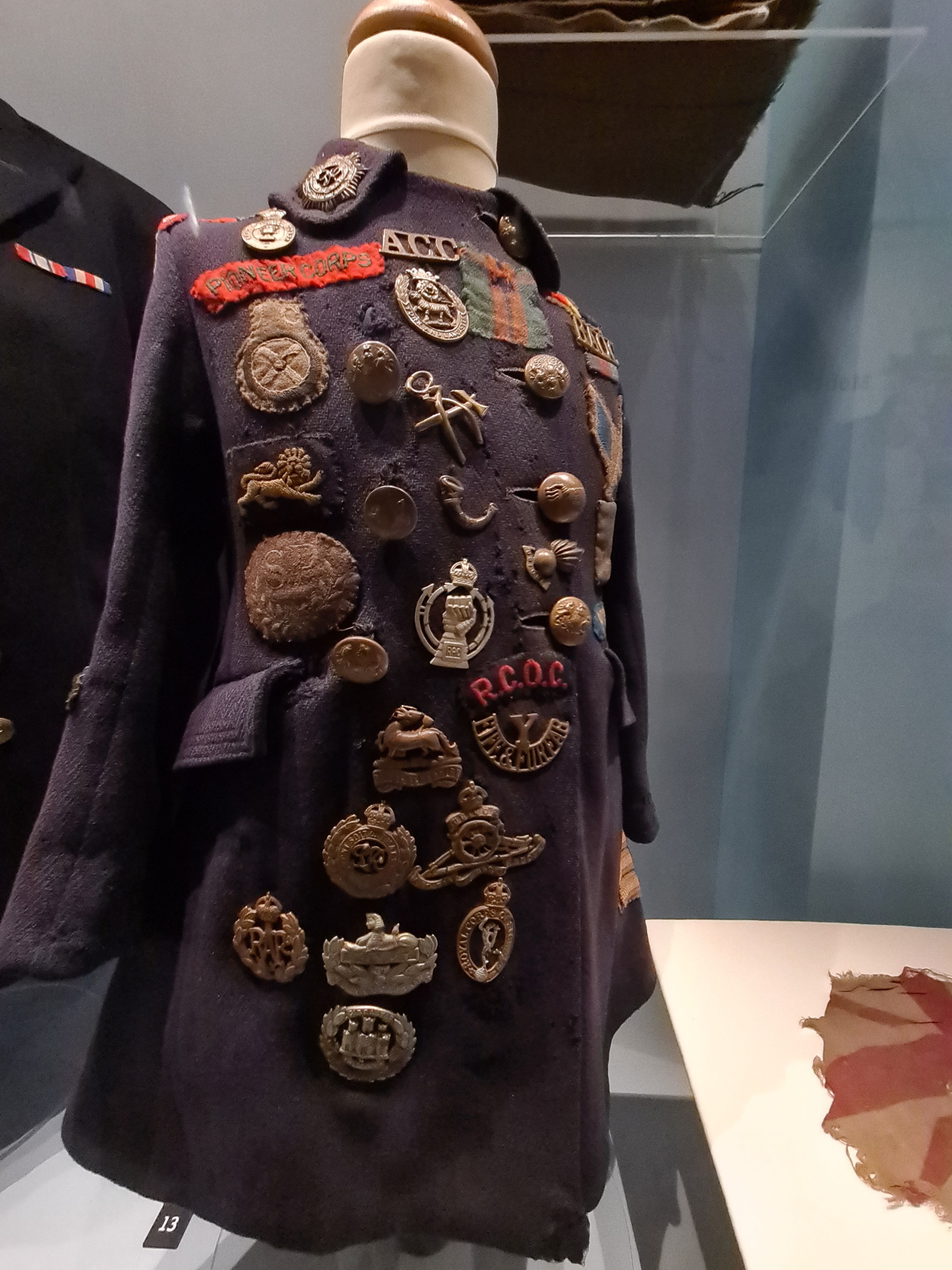
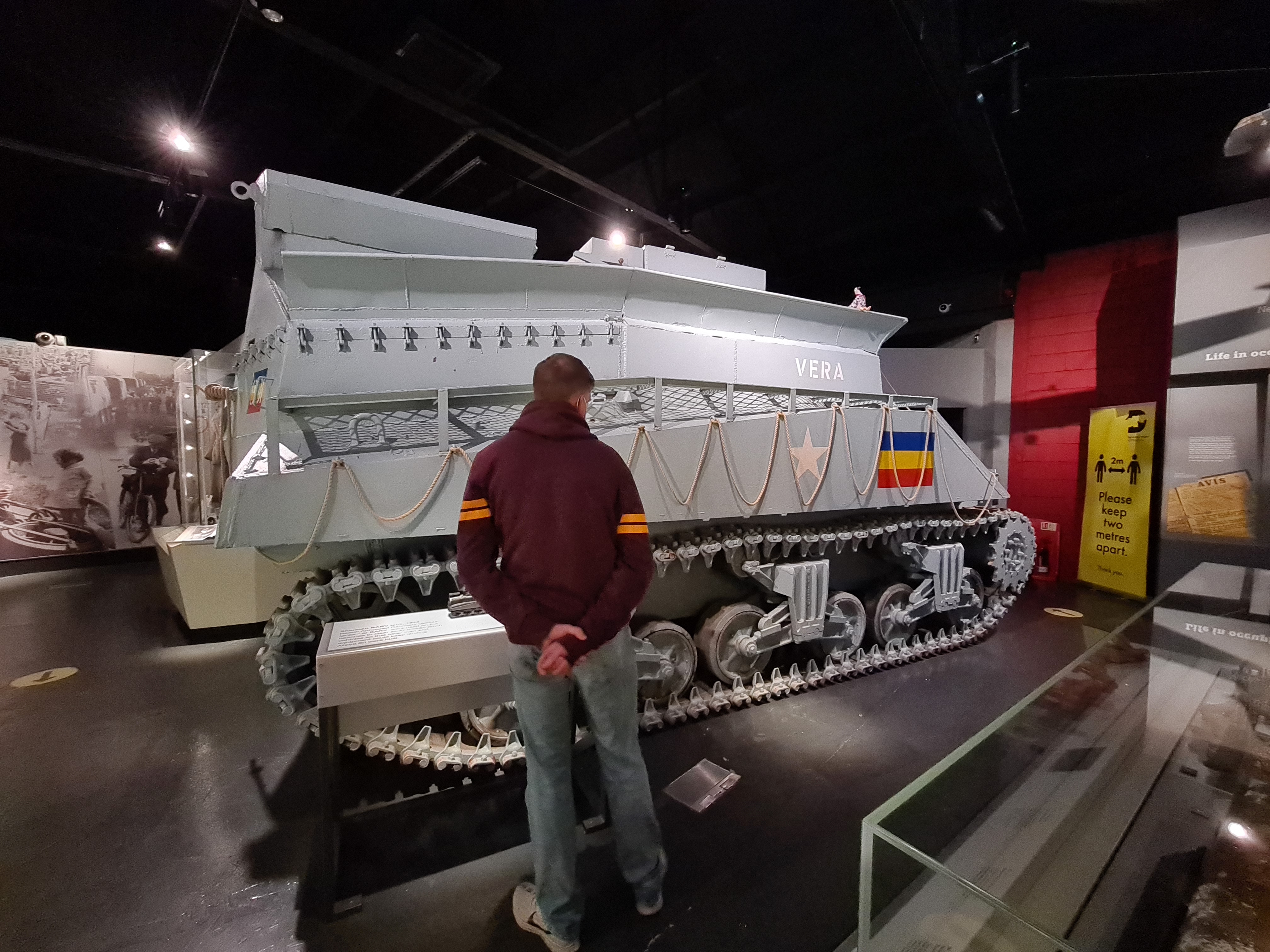
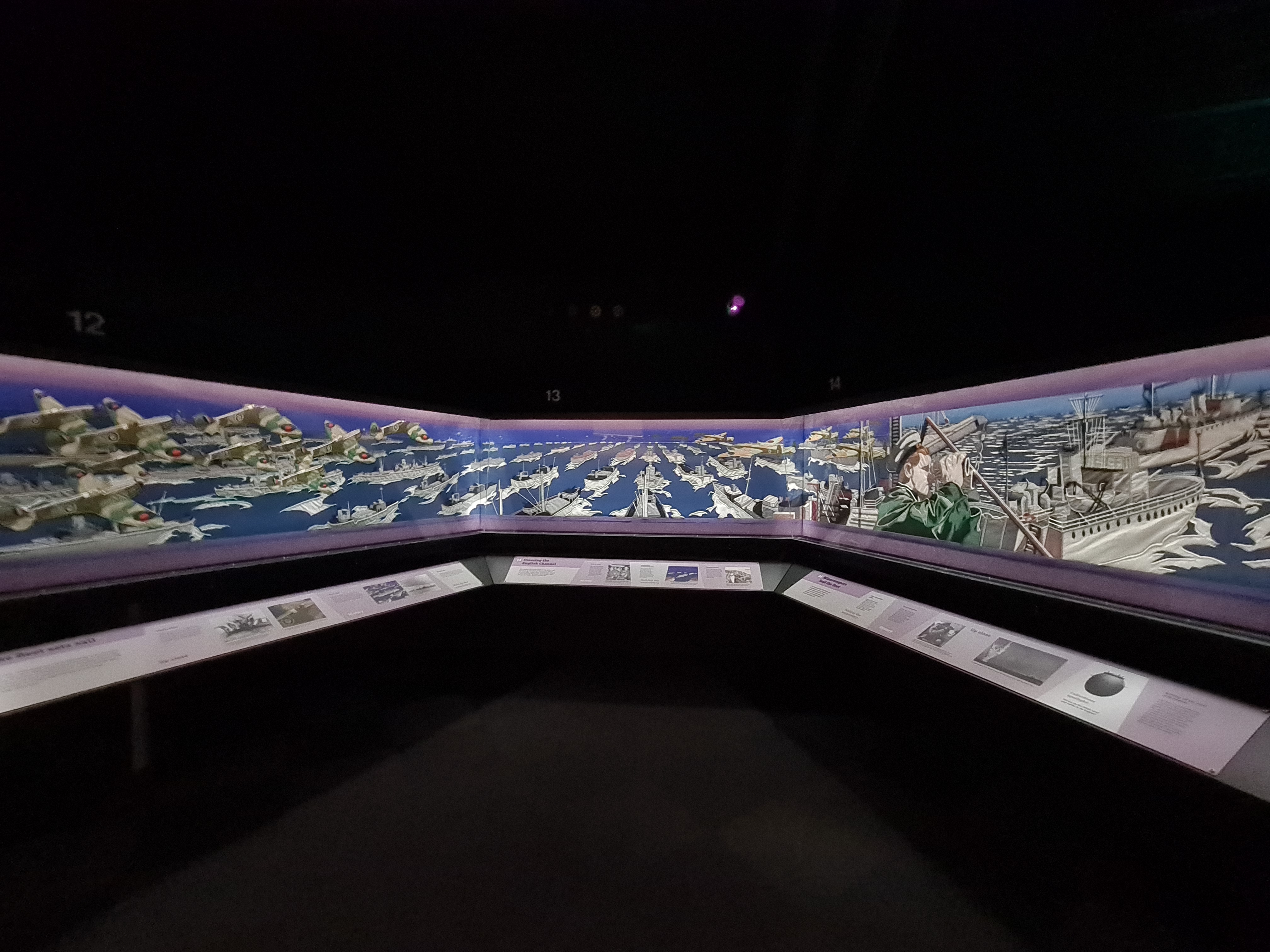
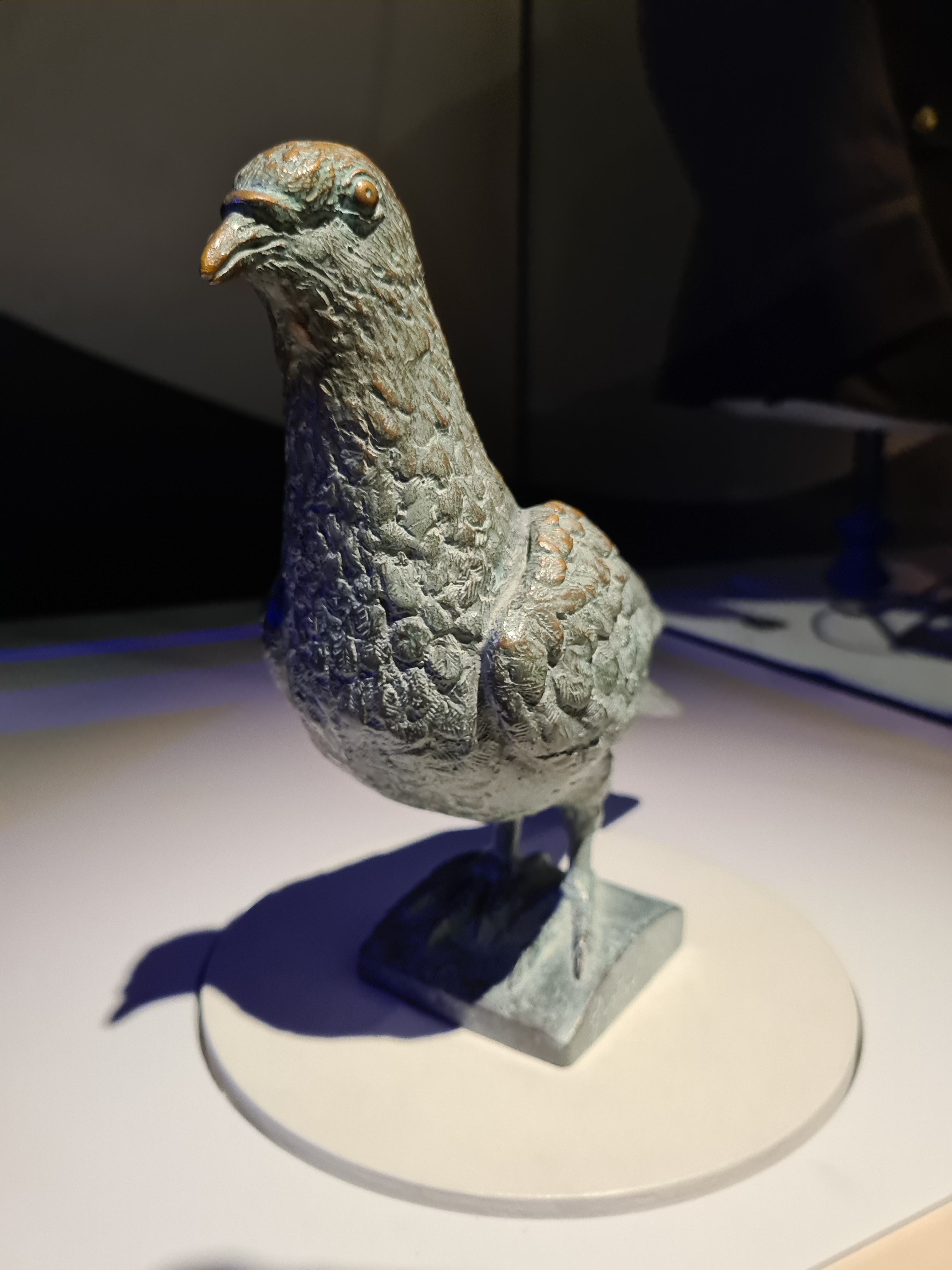
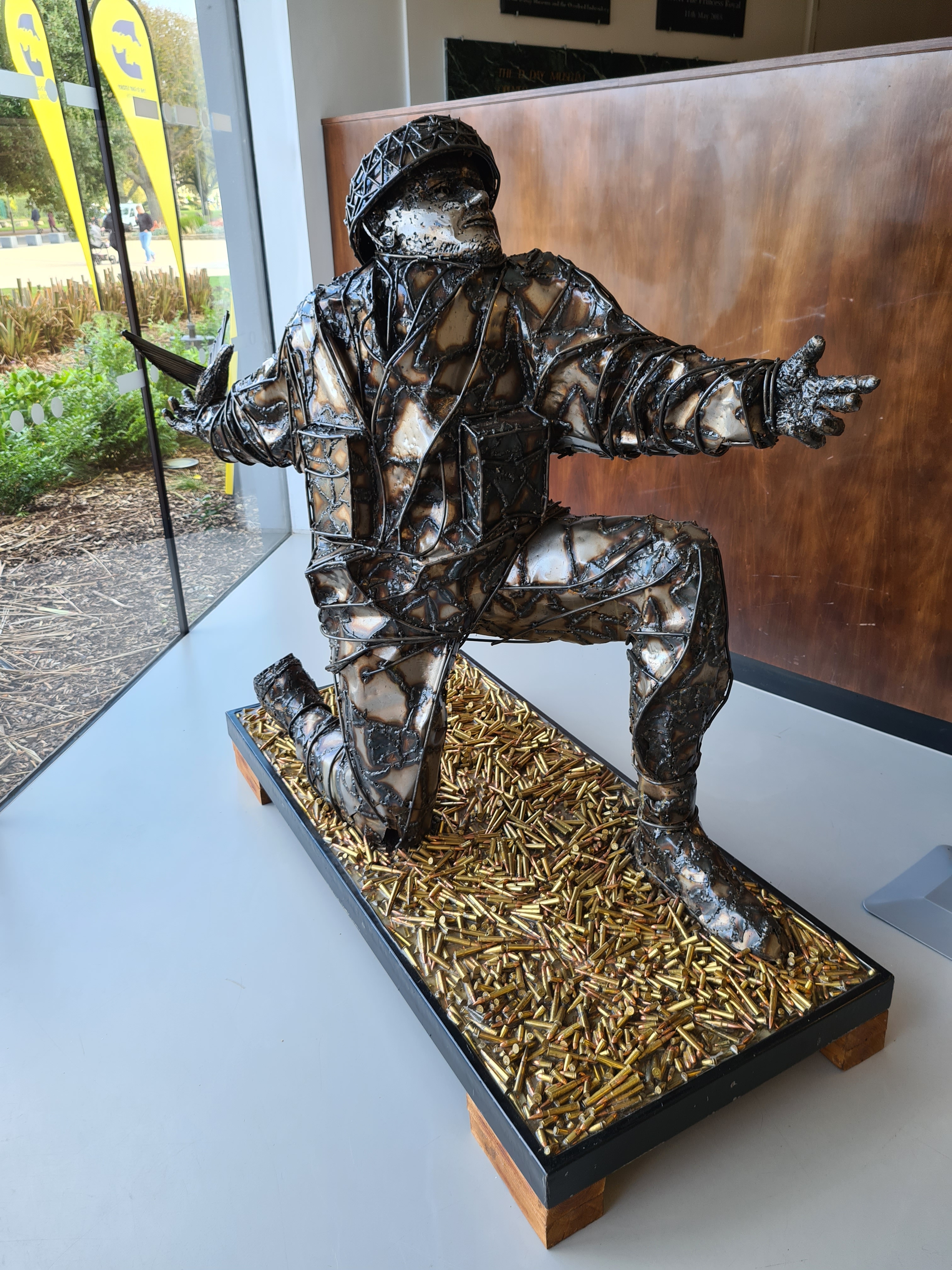
Inside the D-Day Story itself, there was a great collection of personal memorabilia, alongside factual information. From start to finish, we followed a chronological journey of naval response to the operation. This included the preparation (from the evacuation of Dunkirk until just before D-Day), D-Day and the Battle of Normandy, and it’s legacy. The latter included the Overlord Embroidery – an exquisite piece of applique that was over 83 metres in length! My favourite piece of information about the embroidery was that a Scottish piper corrected the uniform he had been depicted in. The embroiderers subsequently replaced his helmet with his beret, what he had actually been wearing. I love the accuracy of the piece!
Portsmouth Naval Memorial
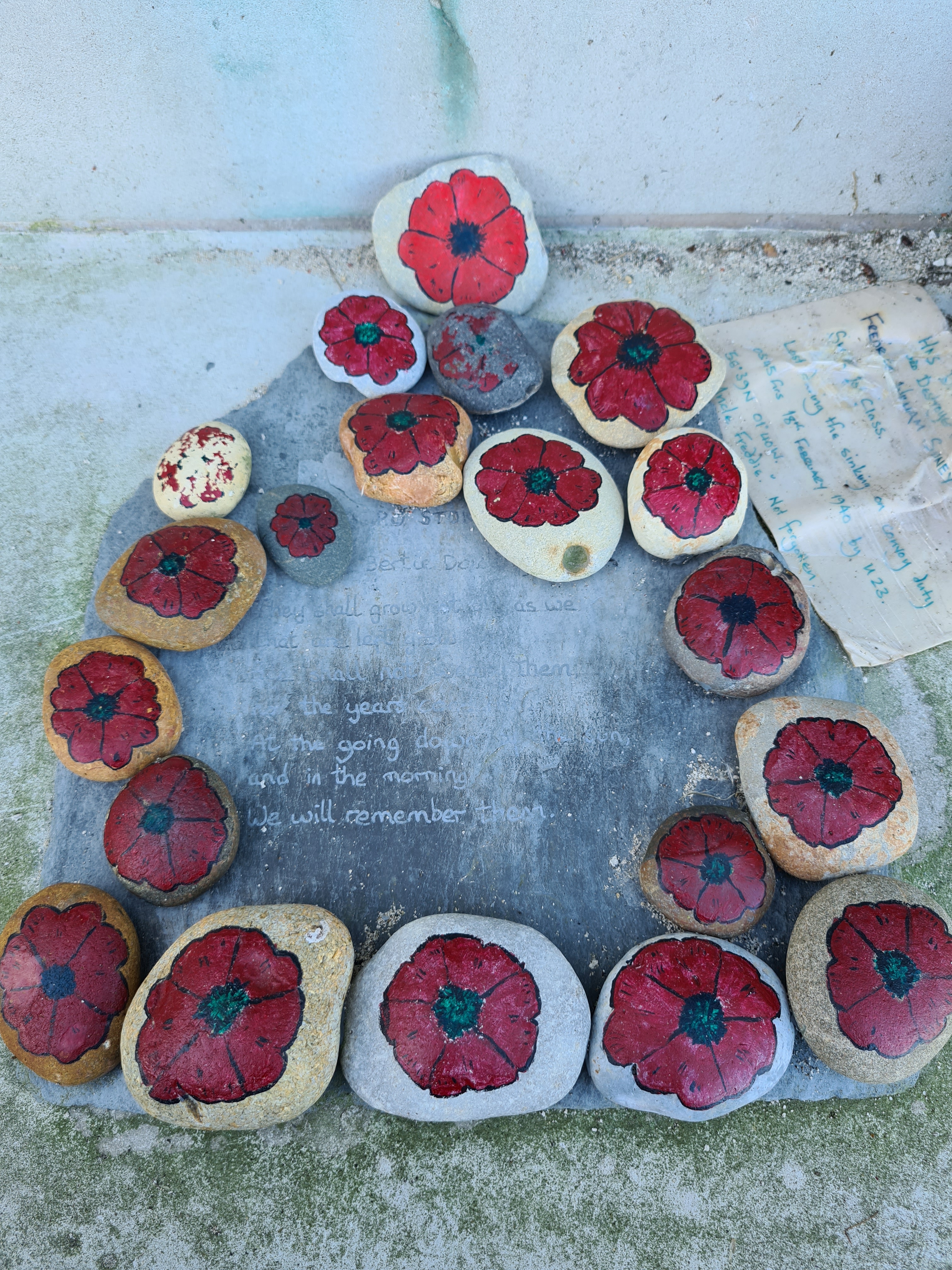
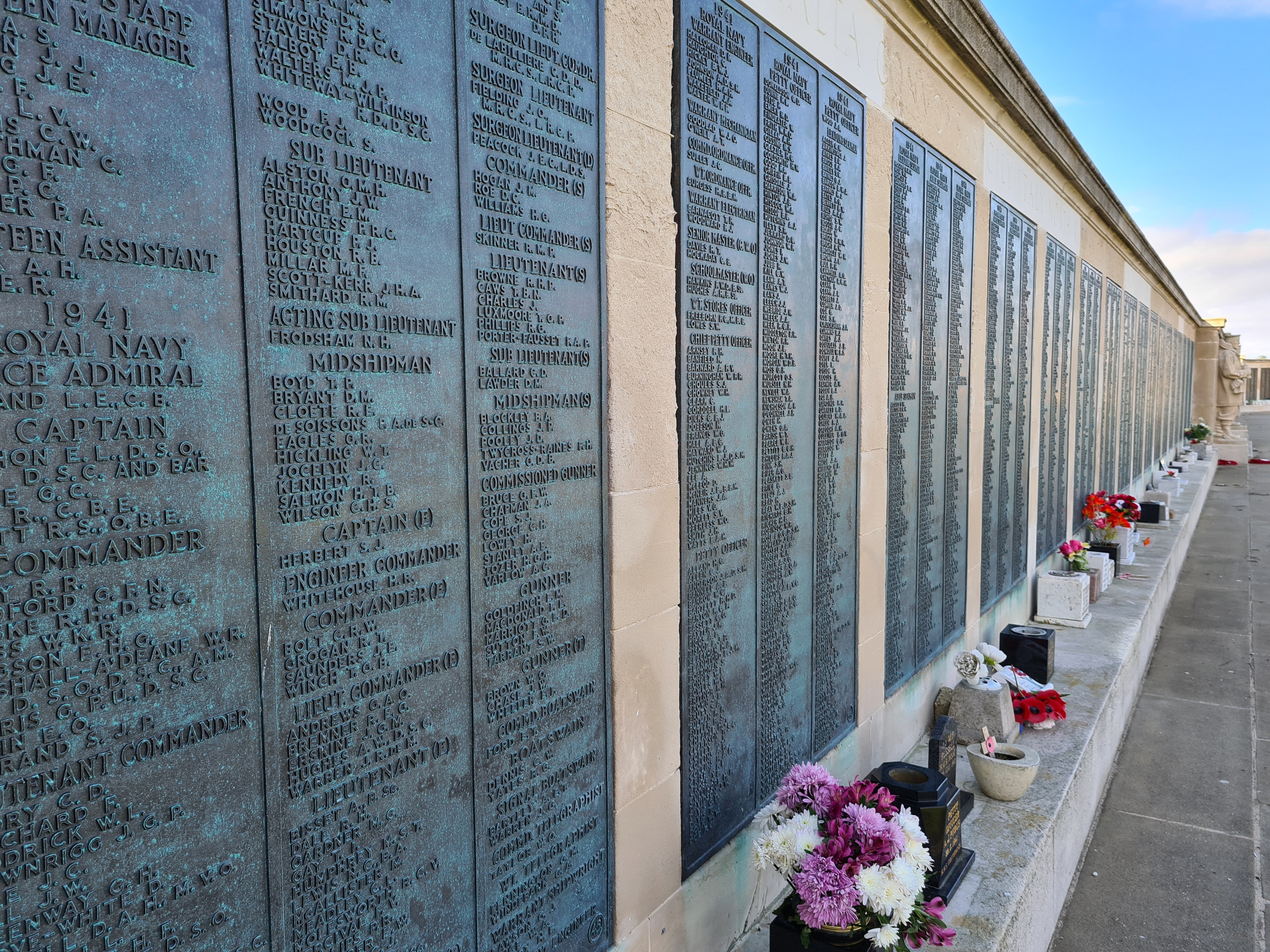
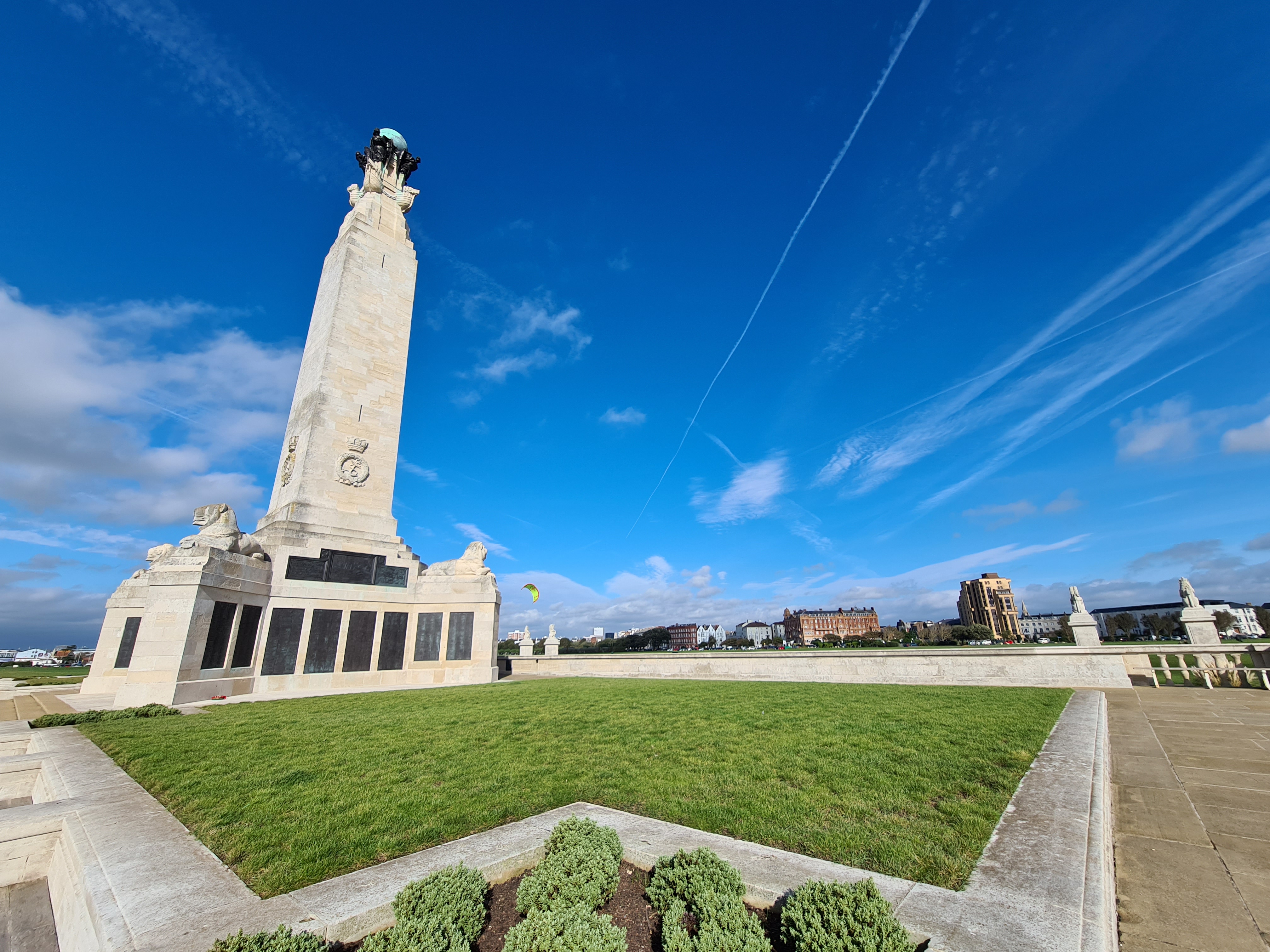
Situated on the seafront, the Portsmouth Naval Memorial is Commonwealth War Graves Commsion to commemorate the 25,000 naval officers who died in World War I and II. The names of these officers surround the obelisk and the walls of the memorial grounds. Listed by year and rank, it is humbling to read their names and see the tributes left by their families so many years later.
Fort Nelson Royal Armouries
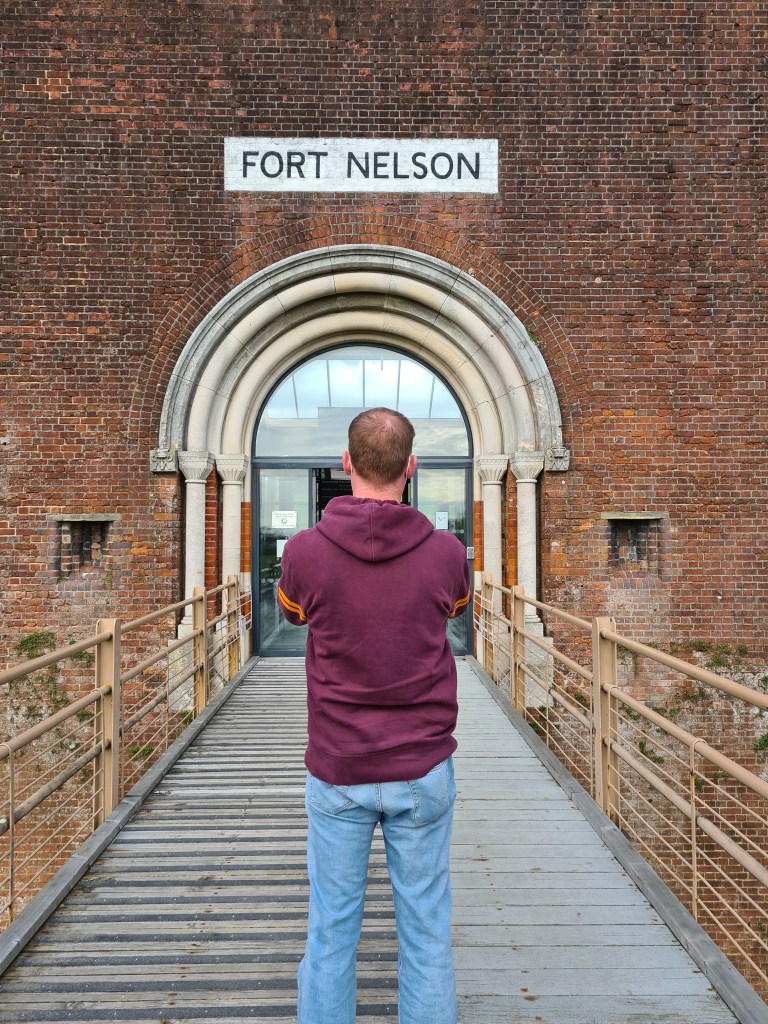
We left Portsmouth itself, as we headed towards Southampton. En route, we stopped at Fort Nelson, home to the Royal Armouries’ collection of artillery and history cannon.
Another “donation only” attraction, Fort Nelson is in Fareham not far from Portsmouth. It is a Victorian fort with high ramparts, original fortifications, parade ground and underground tunnels. It is located in a key position above Portsmouth ad was built in the 1860s to protect against the potential invasion by the French. This never materialised. While never used for it’s intended purpose, the fort played a significant role in both world wars; as a barracks for troops waiting to be deployed and as an anti-aircraft ammunition supply depot.
This national museum houses over 700 pieces of artillery from across the world, spanning 600 years of history. In one outbuilding, a 200 tonne railway howitzer takes centre stage (see below). This cannot help but be imposing. With a range of 13 miles, this railway gun is just one of twelve left in the world. Visitors young and old couldn’t help but be impressed by it’s size and power.
Beneath the surface, Fort Nelson housed a network of tunnels which allowed solider to reach important parts of the fort’s defences. Gunpowder and ammunition stores were housed here, along with changing facilities and the north caponier. The whole fort was self sufficient in case of an invasion or attack and was very cleverly constructed.



 This is not a midlife crisis...